Precalculus
Fundamental
Number
Real number

there is no real number that, when multiplied by itself, results in a negative number. The expression asks the question: What real number, when multiplied by itself (squared), equals ?
Let’s test all possibilities for a Real Number :
-
If is Positive (e.g., 3)
(Result is Positive)
-
If is Negative (e.g., )
(Result is Positive)
-
If is Zero (i.e., )
(Result is Zero)
Since there is no way to multiply a real number by itself and get a negative result like , the answer to cannot be found on the Real Number Line.
Natural number positive number
Irrational number Any real number that cannot be written as a ratio of two integers () like , , (Euler’s number)
Variables (like or )
Coefficients (the number multiplying the variable, like the 3 in )
Terms (parts separated by addition/subtraction, like , , and )
Constant Term (the term with no variable, like 7)
Modulus
- , r =1
- , r=99
Distributive Property
Imagine you are buying items for a school trip:
- First Group (): The number of people going.
- students.
- teachers.
- people.
- Second Group (): The cost per person.
- x = \5$ for lunch.
- y = \3$ for a drink/snack.
- \mathbf{x+y = \8}$ total cost per person.
The total cost is the product of the two:
| Lunch ($5) | Snack ($3) | |
|---|---|---|
| Students () | 10 \times 5 = \mathbf{\50}$ | 10 \times 3 = \mathbf{\30}$ |
| Teachers () | 2 \times 5 = \mathbf{\10}$ | 2 \times 3 = \mathbf{\6}$ |
Total Cost = \50 + $30 + $10 + $6 = \mathbf{$96}$
Associative Property
Fractions
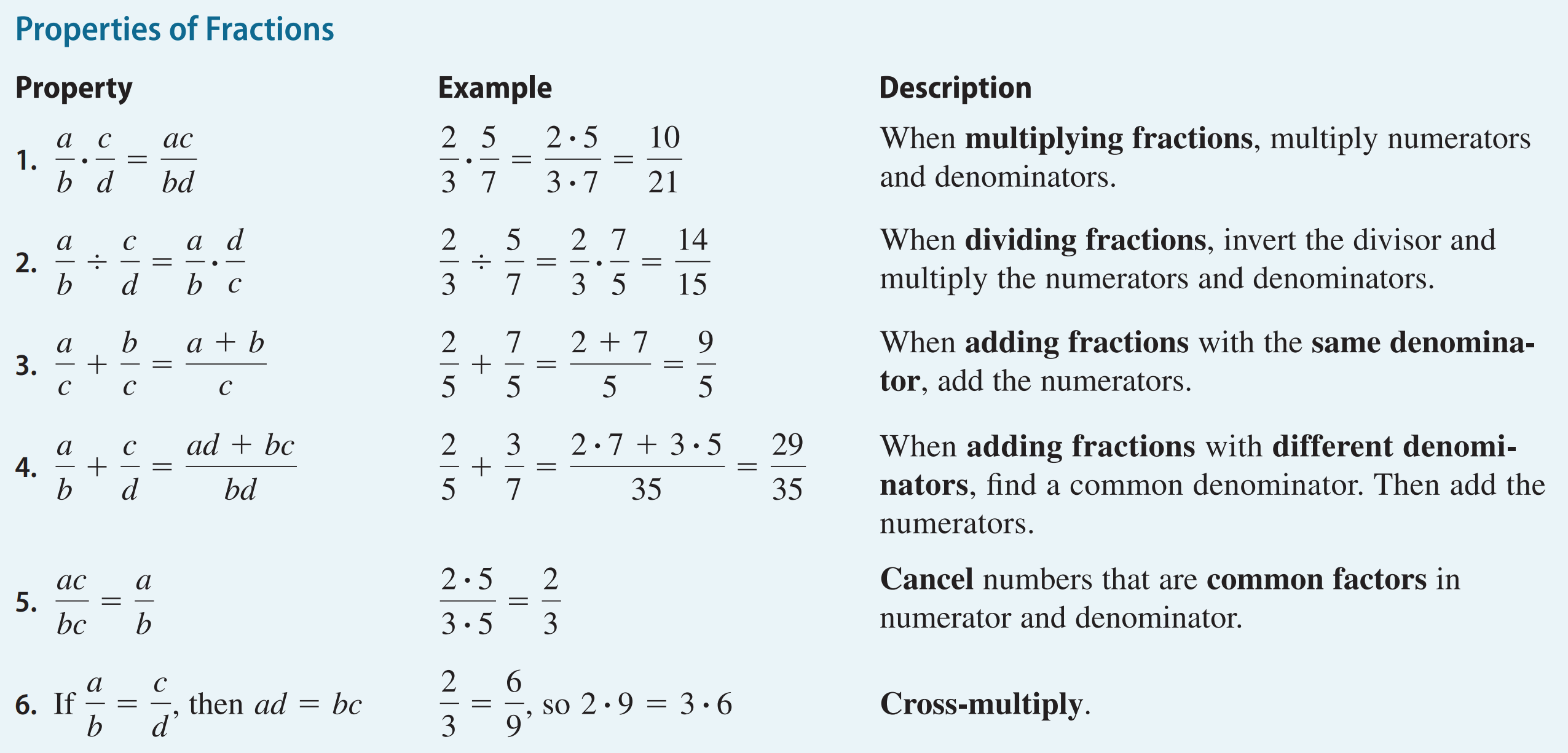
Integer Exponents
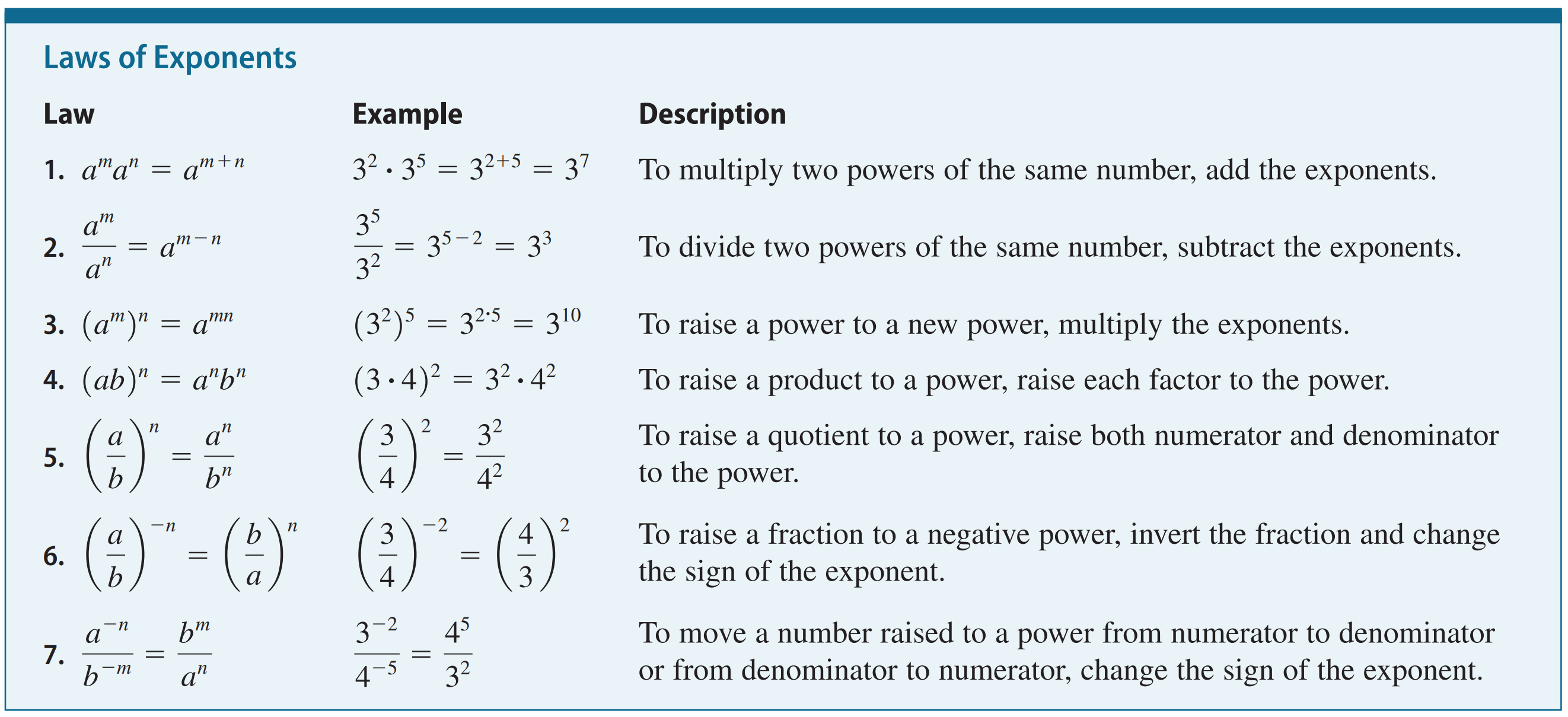
A product of identical numbers is usually written in exponential notation
Radicals
The number inside the root must be a result of something being raised to the power of
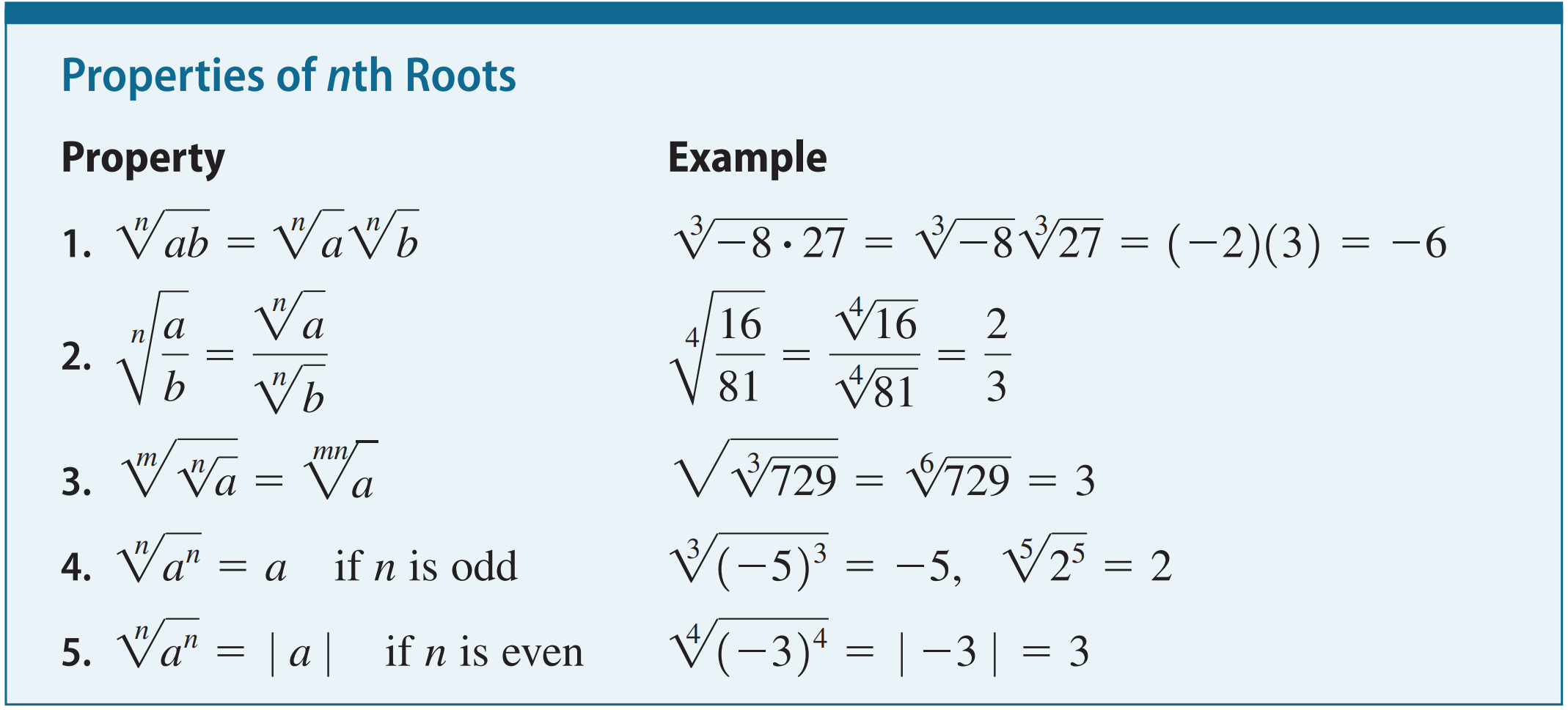
The expression to simplify is .
This step uses Property 1 () to separate the single radical into a product of three individual radicals.
This step simplifies each of the three terms separately:
- Simplifying Since , the fourth root of 81 is 3.
- Simplifying :
- This is rewritten by expressing as a power of 4: .
- The term becomes .
- Simplifying
- This uses Property 5 (, if is even). Since (even), the fourth root of must be the absolute value of , or .
Simplifying
- This uses Property 5 again. The th root cancels the th power, and since is even, we use the absolute value: .
- However, because any real number squared () is always non-negative, the absolute value signs are not necessary. So, simplifies to just .
The final simplified expression is .
The key takeaway is that the absolute value signs are essential when simplifying an even root of a variable raised to the same power (like ), unless you are certain the result is non-negative (like in the case of ).
Rational Exponent
= =
Product Formulas
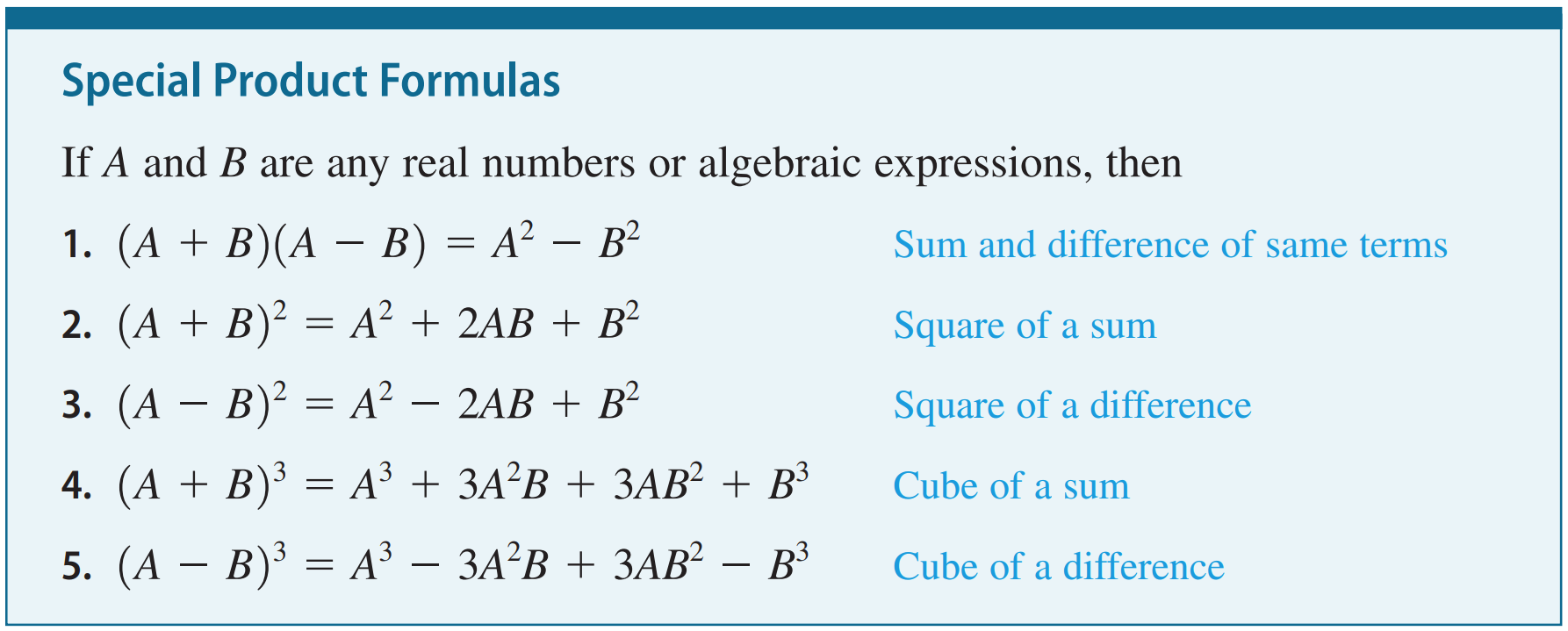
Binomial Theorem
Used to expand expressions that consist of two terms (a “binomial”) raised to a high power. Instead of multiplying brackets manually for hours, this theorem provides a direct shortcut to the final answer.
-
and : The two terms inside the parentheses.
-
: The exponent (the power you are raising the expression to).
-
: The term number you are currently calculating (it starts at 0 and goes up to ).
-
: The Binomial Coefficient, read as ” choose ”:
Rational
A rational expression is simply a fraction (a ratio) where both the numerator (top) and the denominator (bottom) are polynomials. It is also sometimes referred to as an algebraic fraction.
A rational expression can be written in the form , where and are polynomials.
The denominator, , cannot be equal to zero. Division by zero is undefined.
Greatest Common Factor (GCF)
- GCF of .
- Coefficients (10, 15, 5): The largest number that divides all three is .
- Variable (): The lowest power is .
- GCF:
Factoring
Greatest Common Factor (GCF)
This is always the first step. You look for the largest number or variable that divides evenly into every single term.
Difference of Squares
Used for two terms that are both perfect squares being subtracted.
- The sum of squares () cannot be factored using real numbers.
Factoring Trinomials
()
Used for three terms where the coefficient is 1. You look for two numbers that multiply to and add to .
(Because and )
Factor by Grouping
Group the first two terms and the last two terms. Find the GCF for each pair.
- The GCF of is . Result:
- The GCF of is . Result:
Notice that is now common to both parts. “Pull it out” as one factor.
Sum or Difference of Cubes
Used for two terms that are perfect cubes.
- Sum:
- Difference:
Equations
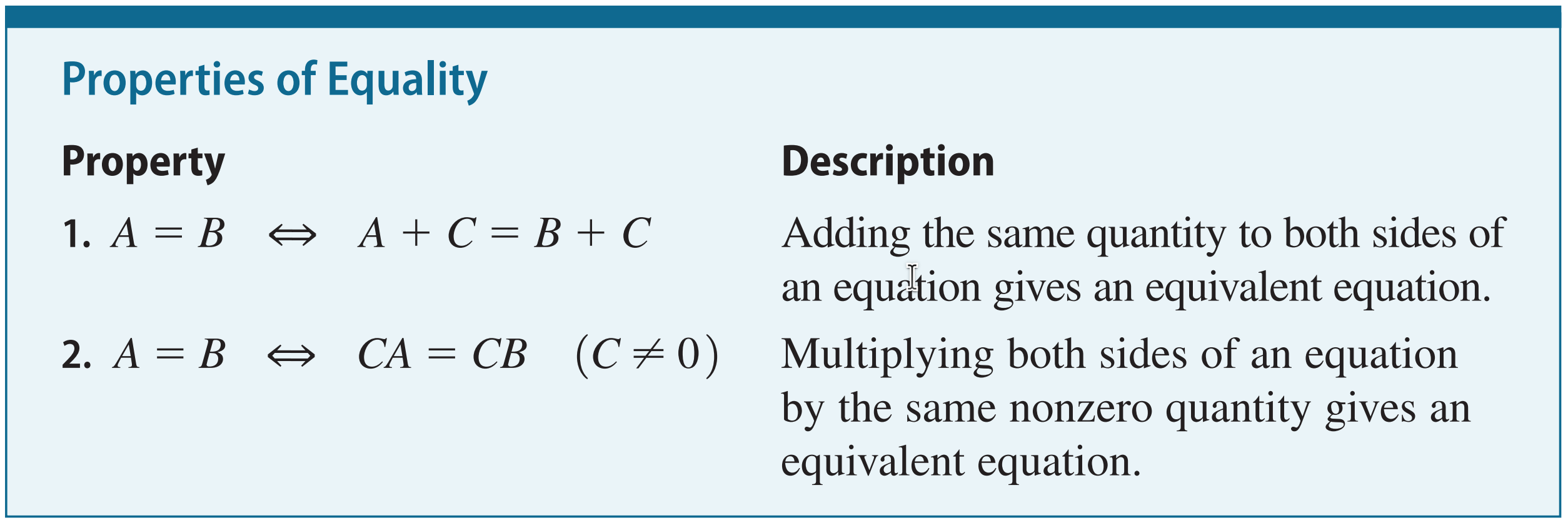
A linear equation has degree 1 — its graph is always a straight line.
the exponent is greater than 1
Quadratic equations are essential for modeling paths, areas, and optimization problems. They are defined by the standard form , where is the unknown, and , , and are known coefficients.
Discriminant
- : The number in front of (In this case, 3).
- : The number in front of (In this case, 5).
- : The “constant” number at the end (In this case, 1).
Complex Number
Real number + imaginary number
The Real Part (): These are normal numbers like ,
The Imaginary Part (): This is a real number multiplied by
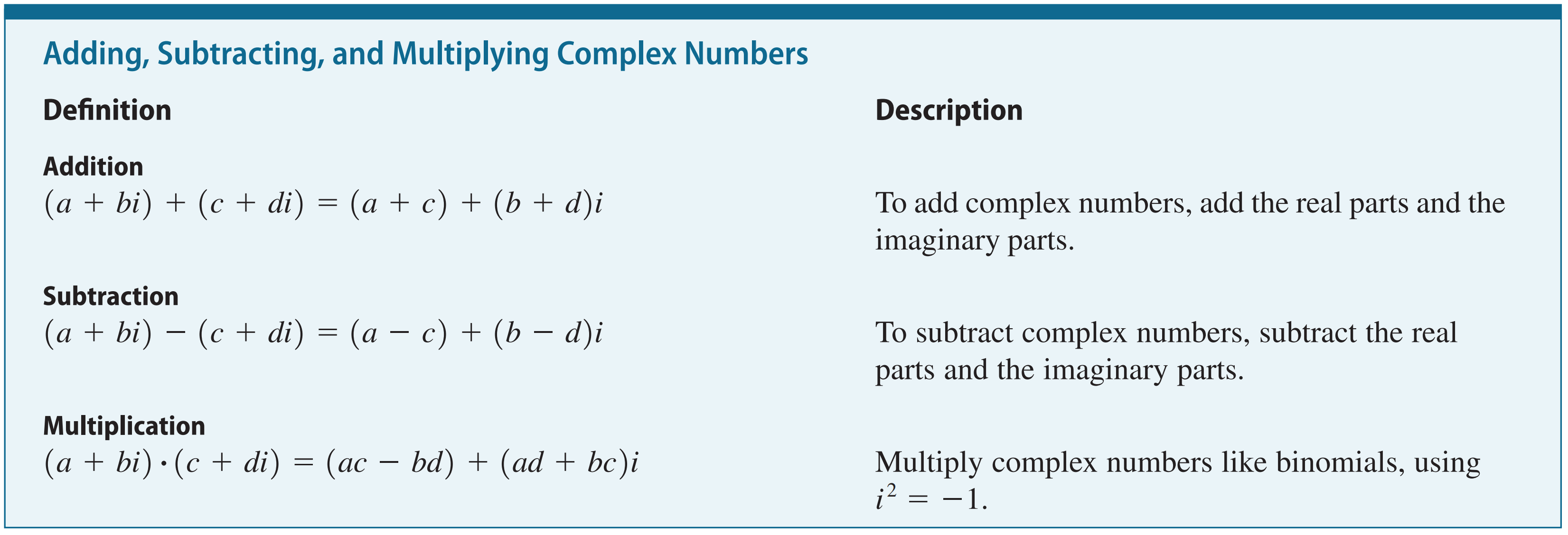
Imagine you are controlling a drone.
- The Real part () is how far East the drone is.
- The Imaginary part () is how far North the drone is.
You want to fly your drone to a specific landmark. You know that:
- The drone is currently at (3 miles East, 4 miles North).
- The landmark is located at (5 miles East, 2 miles South).
If you want the drone to fly in a straight line from its current spot to the landmark, what is the “path” (the difference) it needs to take?
To find the path, we subtract the current position from the destination:
- East/West change: (Go 2 miles further East)
- North/South change: (Go 6 miles South)
The Path: The drone needs to move
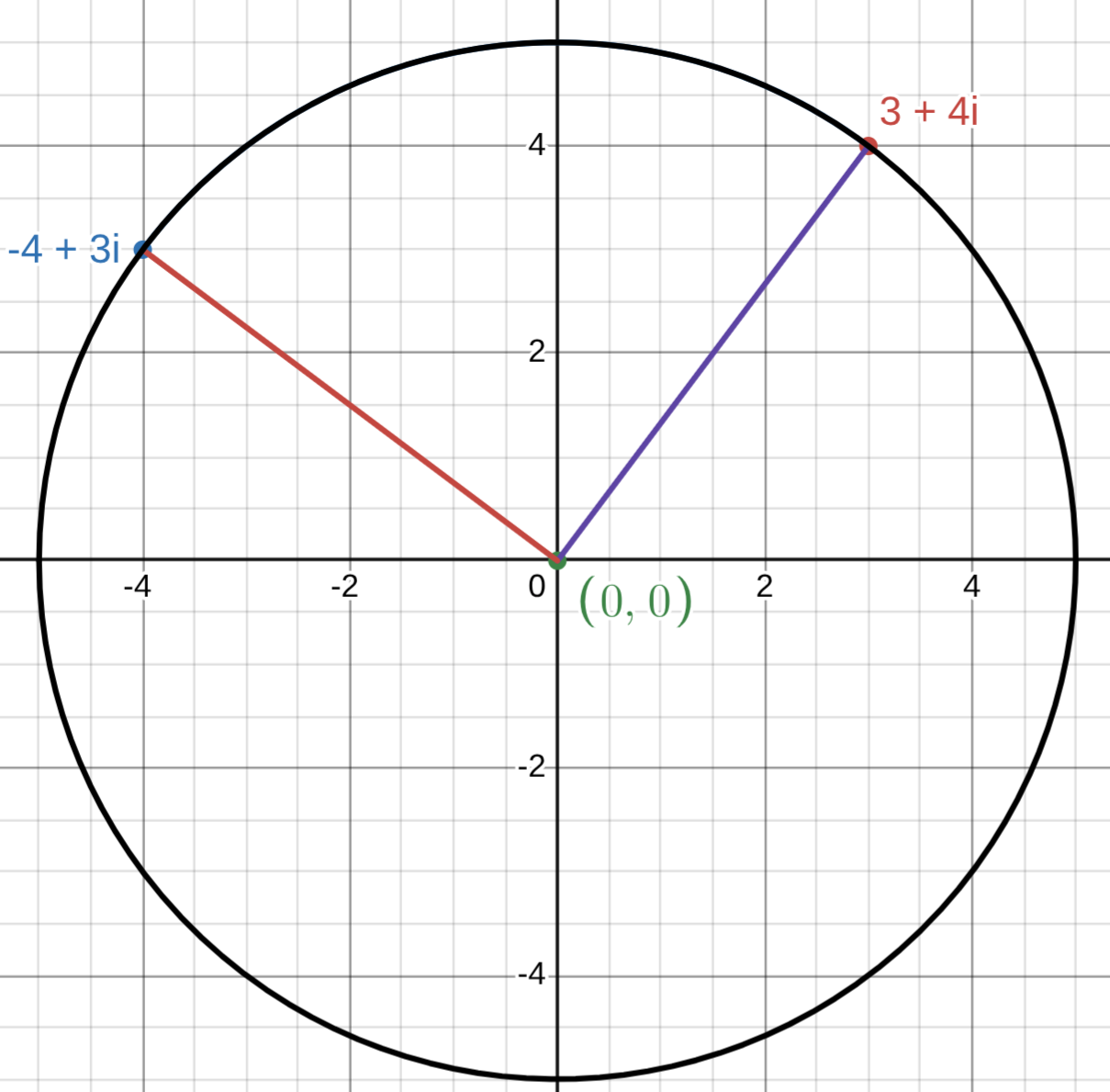
If you want to tell that drone to “turn 90 degrees,” you don’t need a complicated formula; you just multiply its position by .
- Current position:
- Rotate 90°:
- Since , this becomes .
| Power | Simplified | Rule |
|---|---|---|
| Remainder of 1 | ||
| Remainder of 2 | ||
| Remainder of 3 | ||
| Remainder of 0 (no remainder) |
The 180-Degree “Flip”
Think of the number line. If you are at 1 and you multiply by , you “flip” over to .
- Geometrically, this is a 180-degree rotation around the center (zero).
- If you multiply by again, you flip back to 1. Another 180 degrees.
- Total rotation for two steps: (a full circle).
Now, look at the math definition: This means that doing the “multiply by ” action twice is the exact same thing as “multiplying by ” once.
If “multiplying by ” is a 180-degree turn, then “multiplying by ” must be half of that turn to make the math work. Half of 180 degrees is 90 degrees.
Guidelines for Modeling with Equations
- Identify the Variable. Identify the quantity that the problem asks you to find. This quantity can usually be determined by a careful reading of the question that is posed at the end of the problem. Then introduce notation for the variable (call it x or some other letter).
- Translate from Words to Algebra. Read each sentence in the problem again, and express all the quantities mentioned in the problem in terms of the variable you defined in Step 1. To organize this information, it is sometimes helpful to draw a diagram or make a table.
- Set Up the Model. Find the crucial fact in the problem that gives a relationship between the expressions you listed in Step 2. Set up an equation (or model) that expresses this relationship.
- Solve the Equation and Check Your Answer. Solve the equation, check your answer, and state your answer as a sentence.
A car rental company charges 30 dollar a day and 15¢ a mile for renting a car. A tourist rents
a car for two days, and the bill comes to $108. How many miles was the car driven?
- Let = the number of miles driven.
- Daily cost: The company charges \302 \times 30 = 60$.
- Mileage cost: The company charges (or \0.15x0.15x$.
- Total Bill: The problem states the final bill comes to \108$.
Inequalities
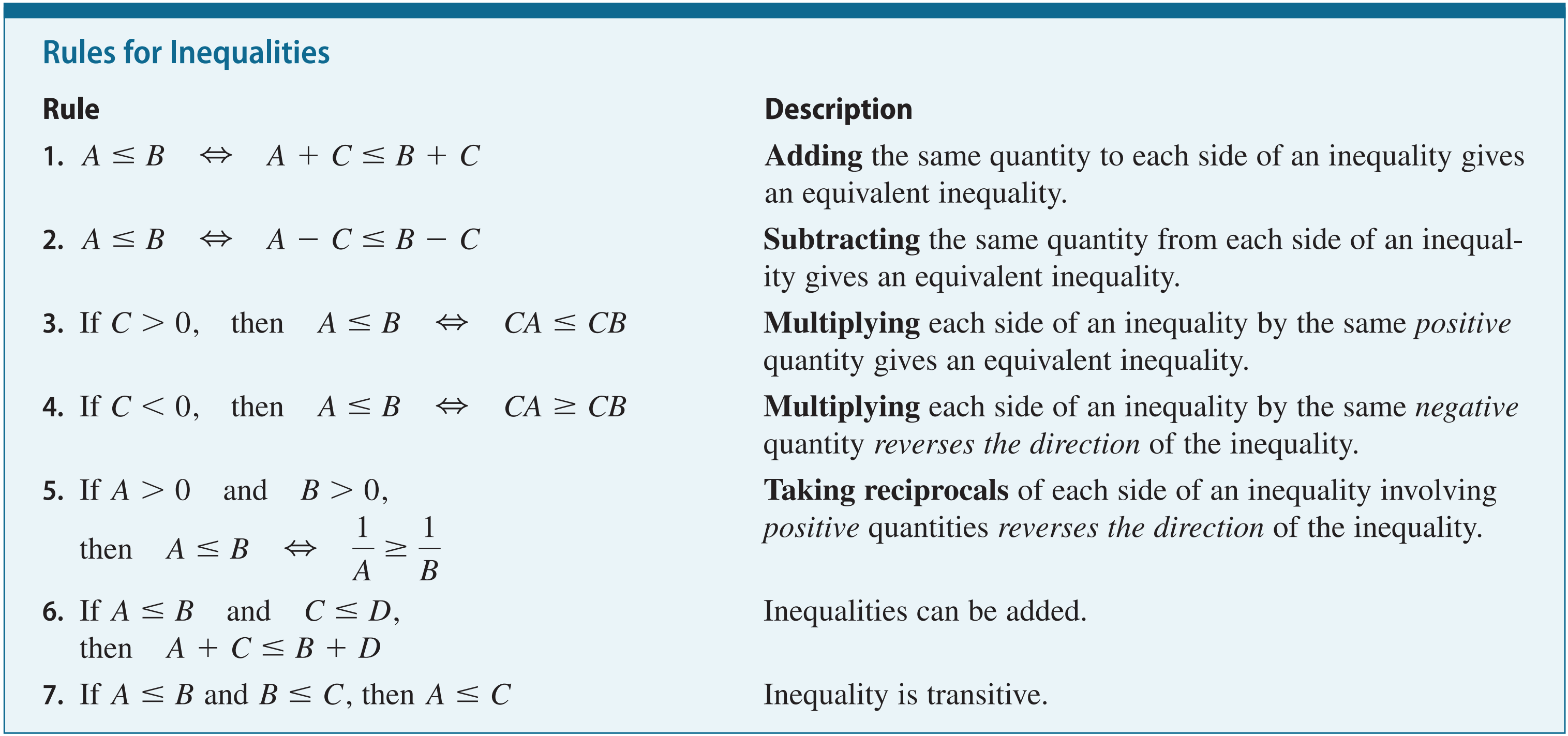
A linear inequality is one where the variable has a power of 1. When you graph these, they always form a straight line that divides the plane into two regions.
- or
Subtract 3: Divide by 2:
A nonlinear inequality contains a variable with a power other than 1 (like , ), or variables multiplied together, or variables in a denominator.
- Quadratic (), Rational (), or Absolute Value ().
Find the “critical points” where . This happens at and .
Test the intervals:
- If (between -2 and 2): is False.
- If (greater than 2): is True.
- If (less than -2): is True. The solution is or .
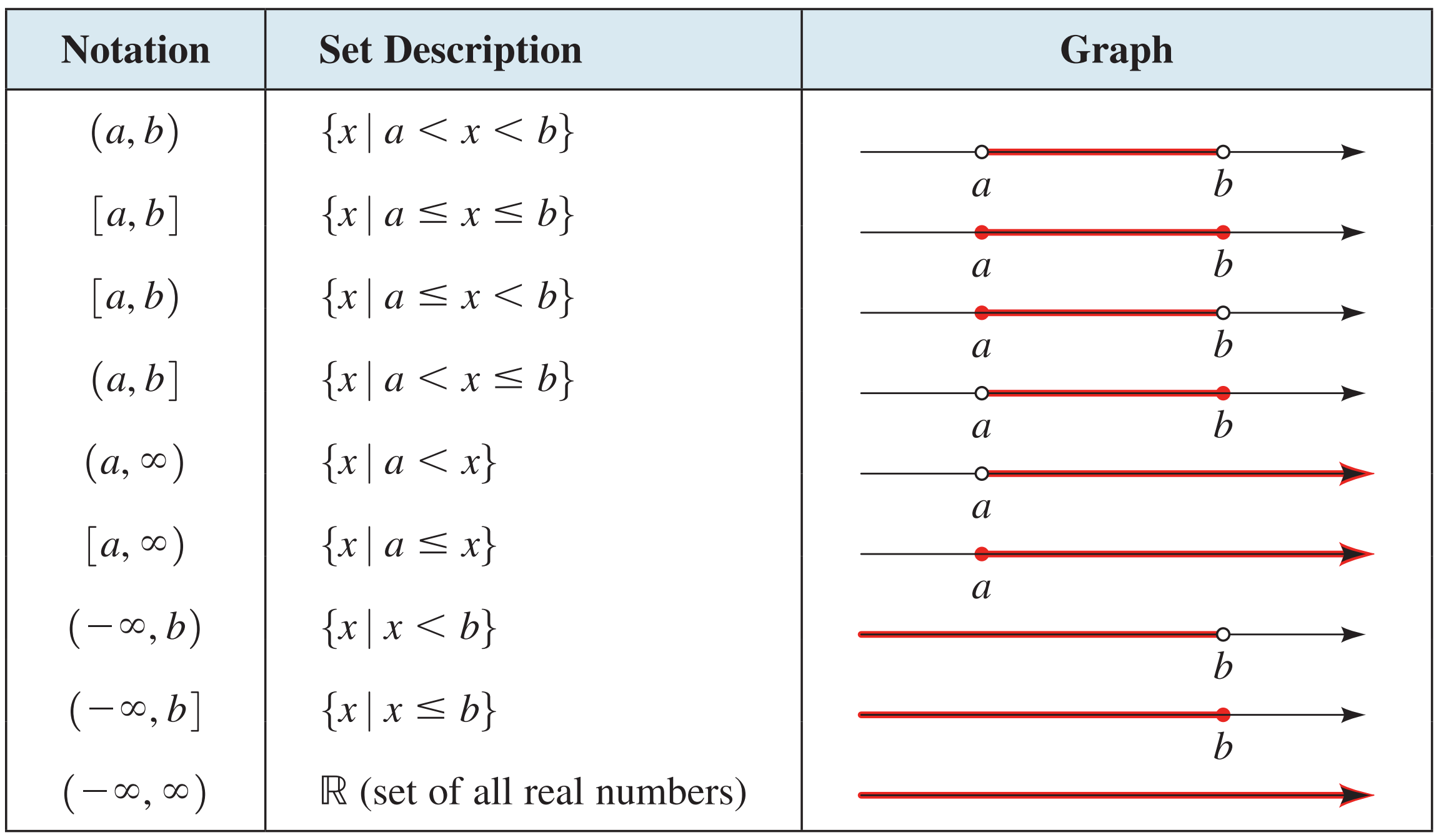
Intervals
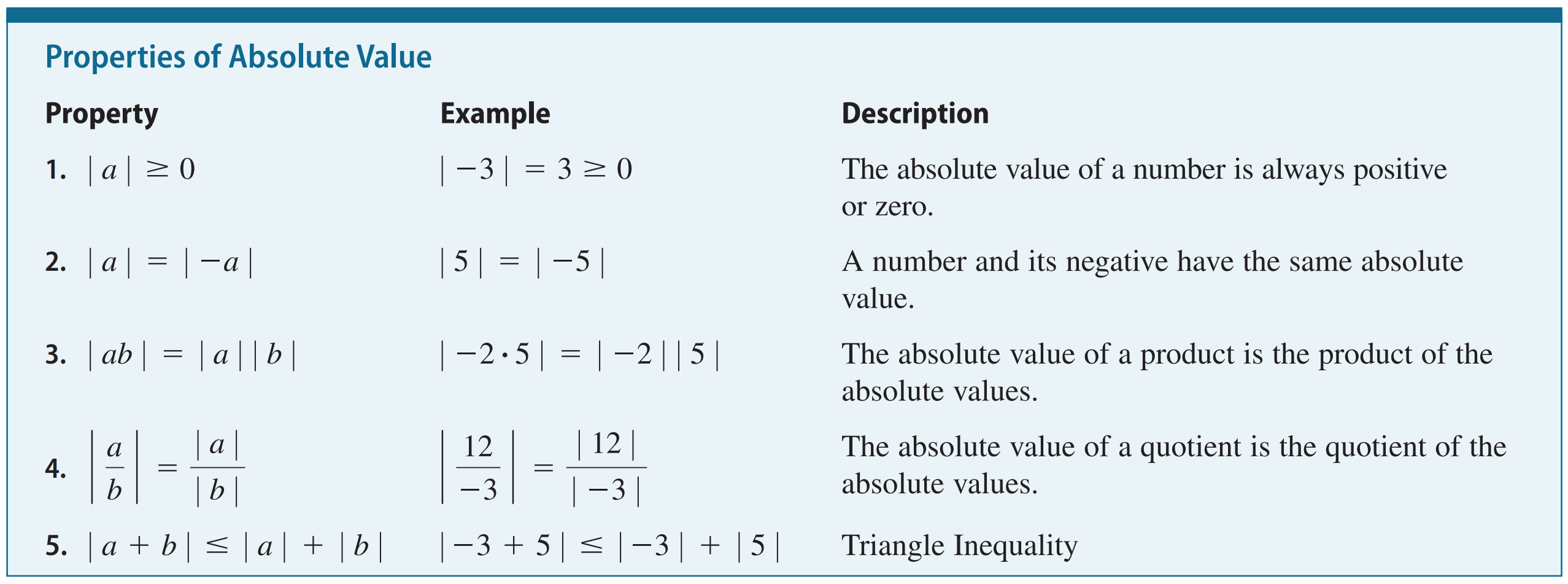
Absolute Value
Coordinate Plane, Graphs of Equations, Line, Circles
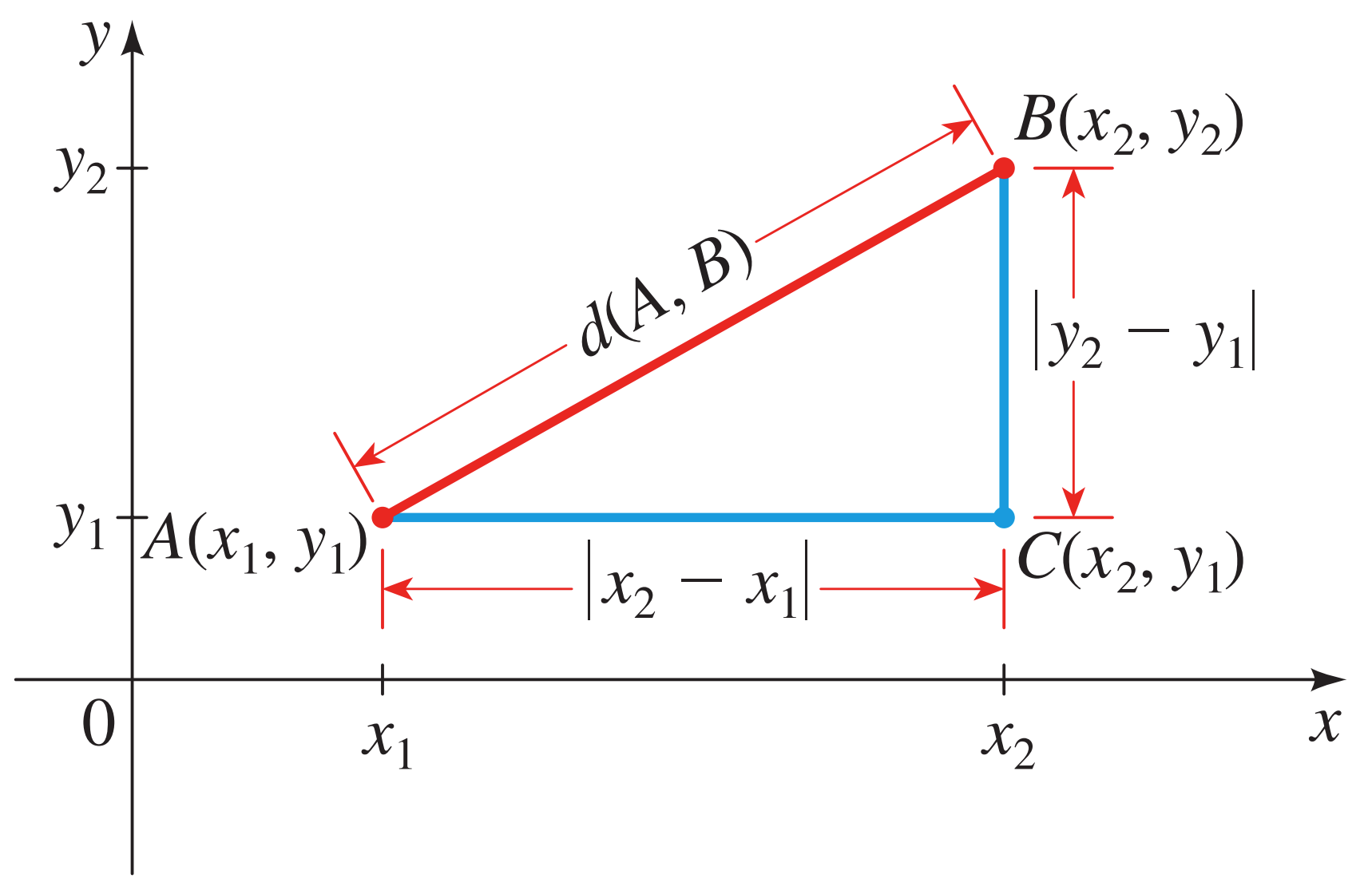
Distance formula
- The Subtraction : This is just a math way of saying “how many steps did I walk sideways?” If you start at and end at , you walked steps.
- The Squaring : This comes directly from Pythagoras (). Squaring also makes sure that even if you walk “backwards” (negative numbers), the result becomes positive, because distance is always positive.
- The Plus Sign : We add the “sideways steps” squared and the “upward steps” squared together, just like .
- The Square Root : In the Pythagorean theorem, we have . To get just (the distance), we have to “undo” the square by taking the square root.
Example
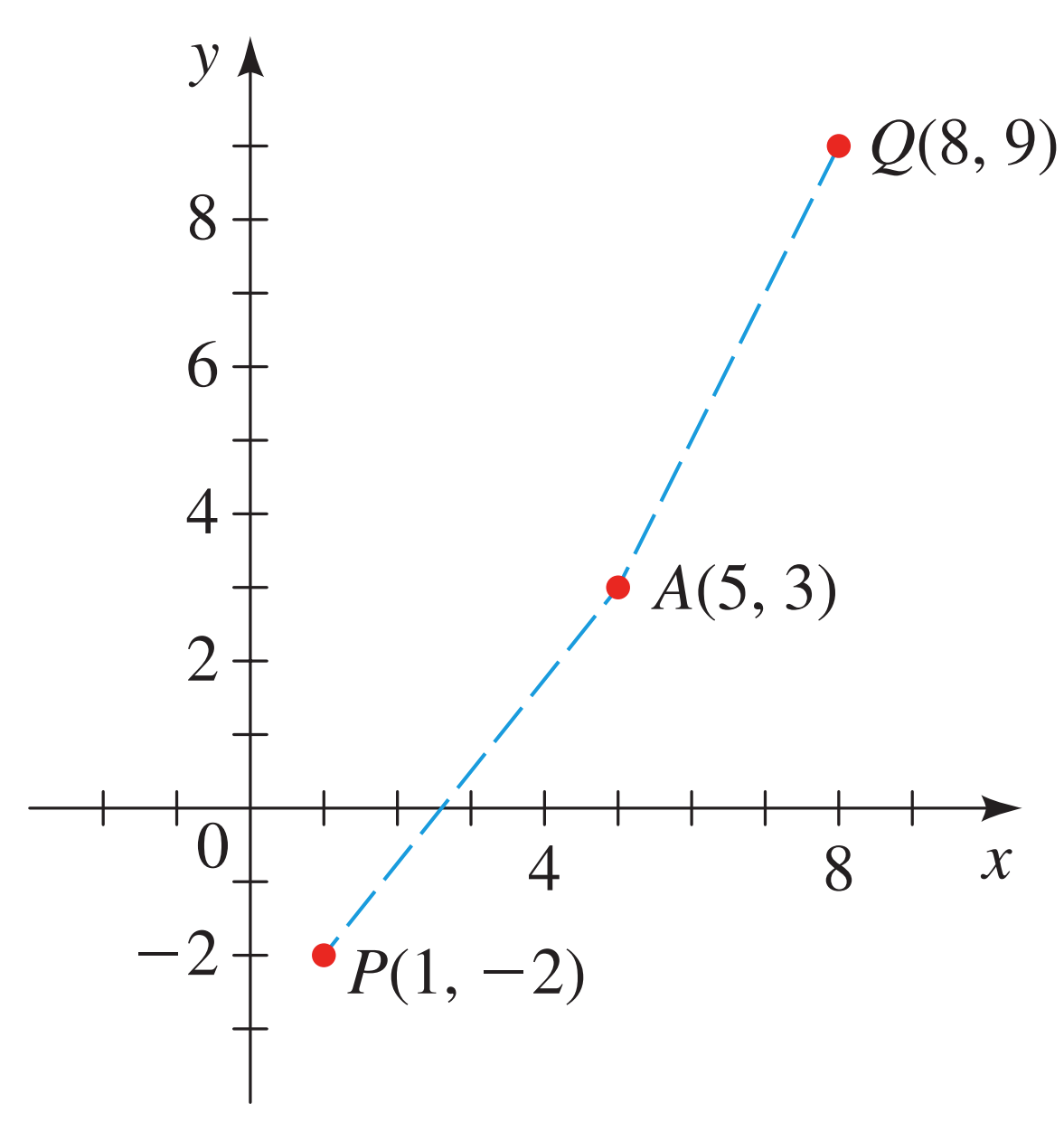
The goal is to find which point is closer to . To do that, we find the distance to and the distance to .
Distance from to
- Step 1 (Subtract): and
- Step 2 (Square): and
- Step 3 (Add):
- Step 4 (Root): The distance is
Distance from to
- Step 1 (Subtract): and
- Step 2 (Square): and
- Step 3 (Add):
- Step 4 (Root): The distance is
Since is a smaller number than , Point is closer to than Point is.
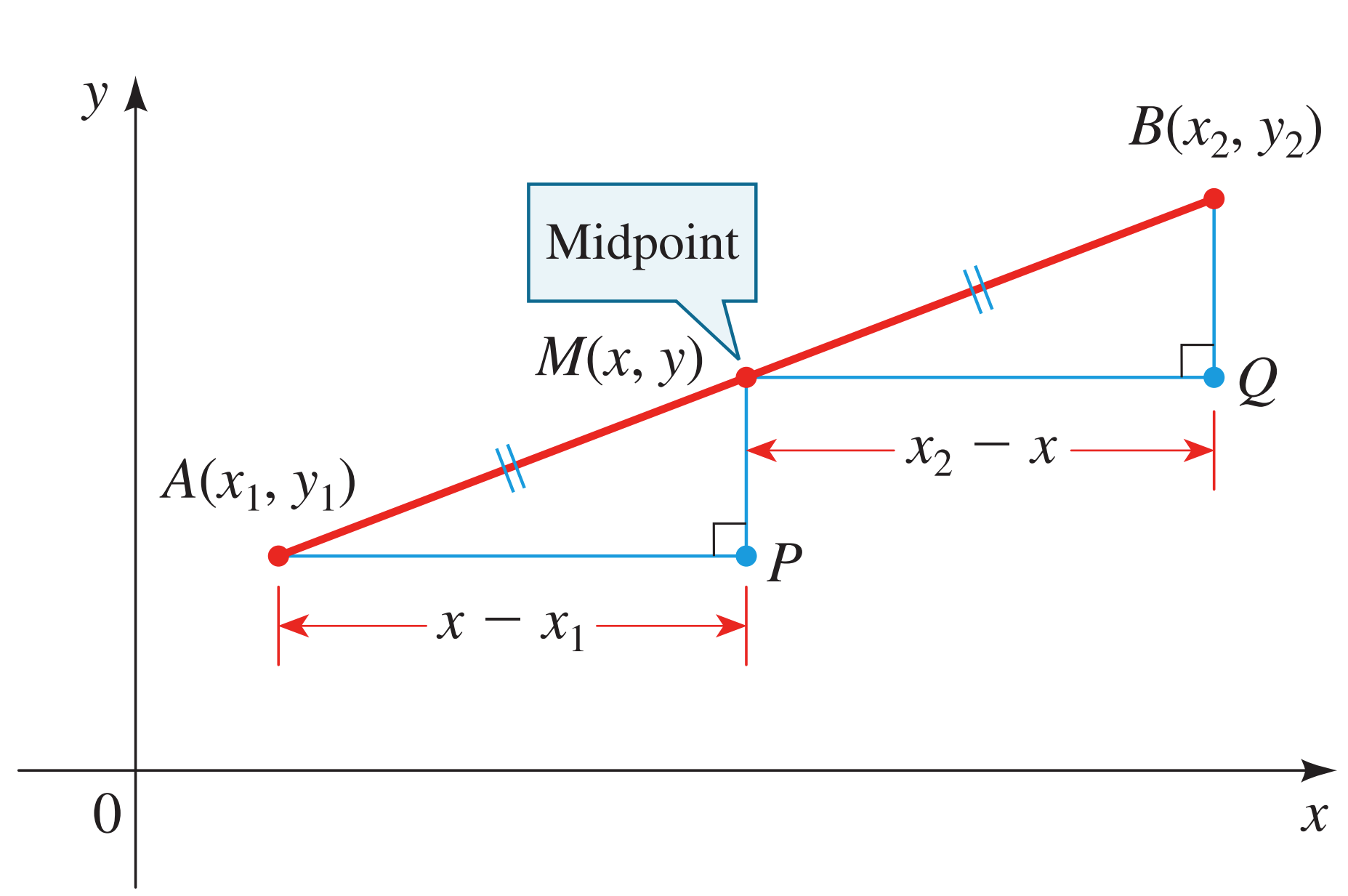
Midpoint formula finds the coordinates of the point that lies exactly halfway between two endpoints.
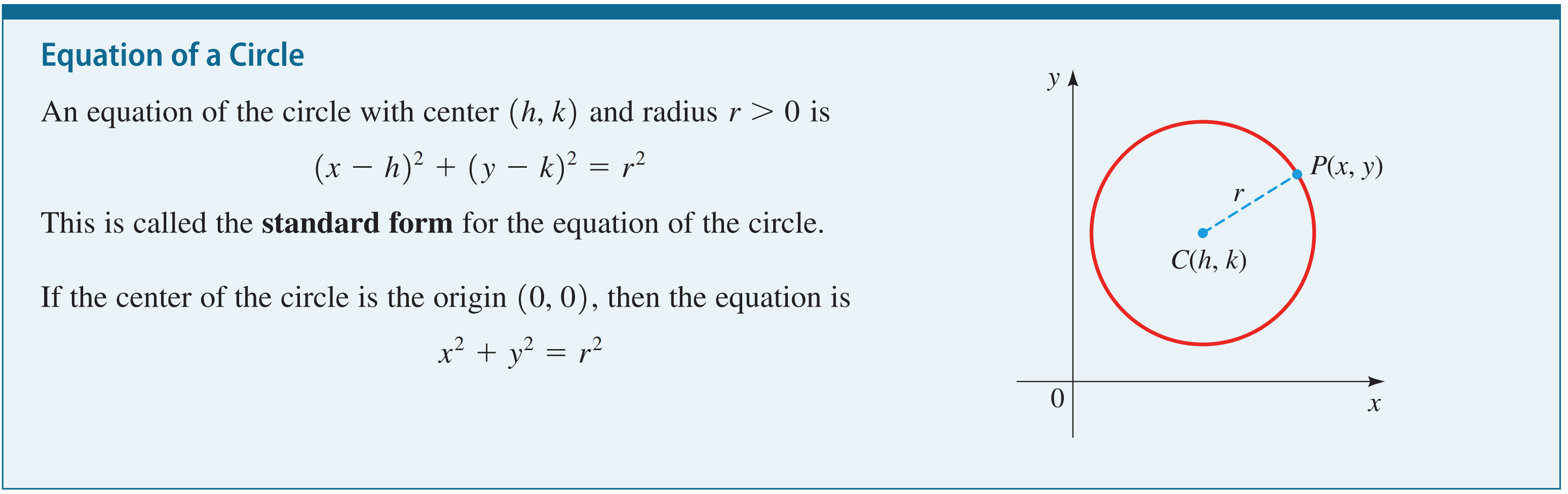
Circle equation standard Form (Center-Radius Form)
This is the most common and useful form because it tells you the center and the radius at a glance.
- : The coordinates of the center.
- : The radius of the circle.
- : Any point on the edge of the circle.
Intercept
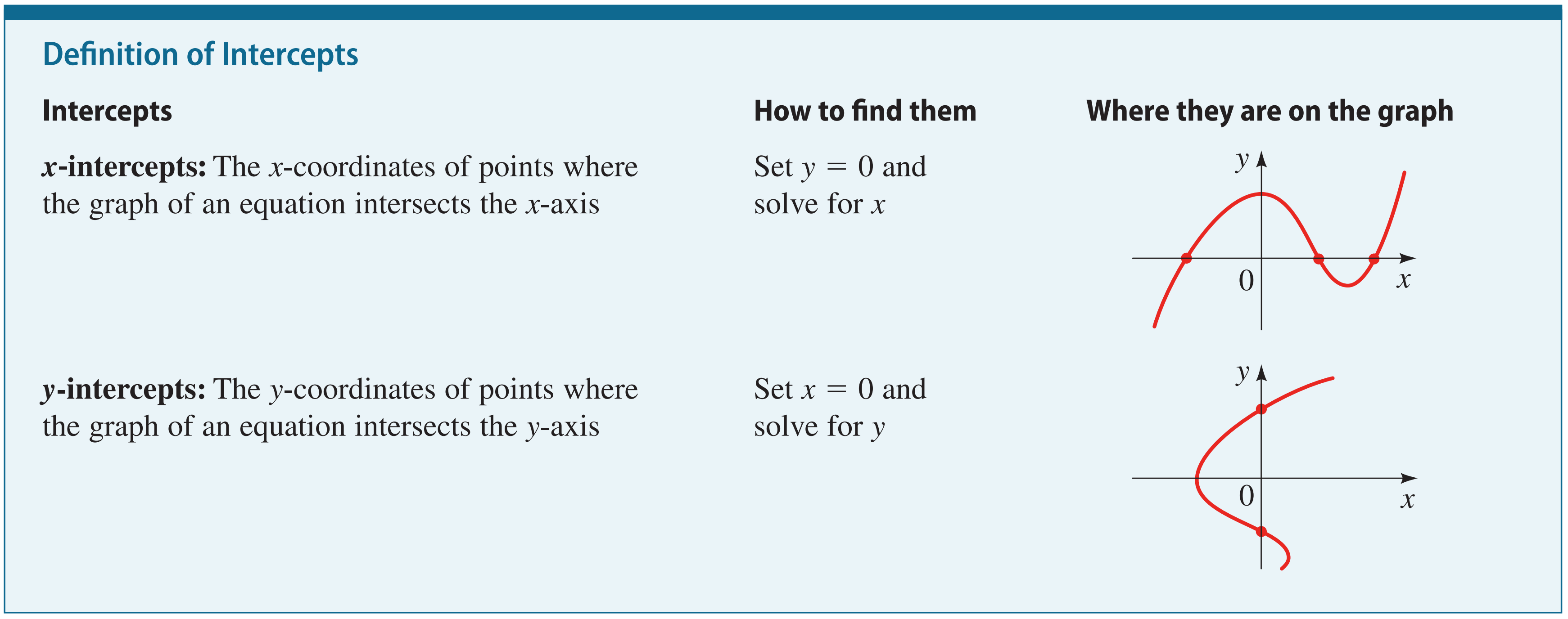
Lines
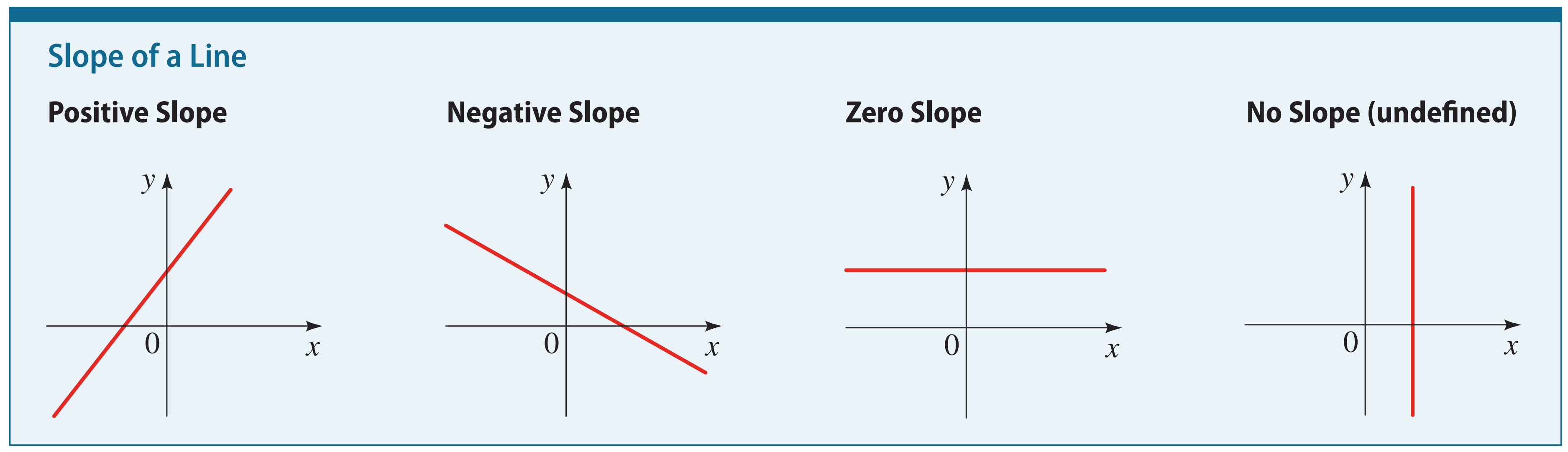
slope is the measure of steepness
- Numerator (): This is the Rise. It tells you how much the line goes up or down.
- Denominator (): This is the Run. It tells you how much the line goes left or right.
Circle Equation
point-slope equation:
Parallel Lines: Two non-vertical lines are parallel if they have the same slope ().
Perpendicular line is a line that intersects another line at a perfect 90° angle (also known as a right angle). Two lines with slopes m1 and m2 are perpendicular if and only if m1m2 = -1,
that is, their slopes are negative reciprocals:
Functions
General properties for functions
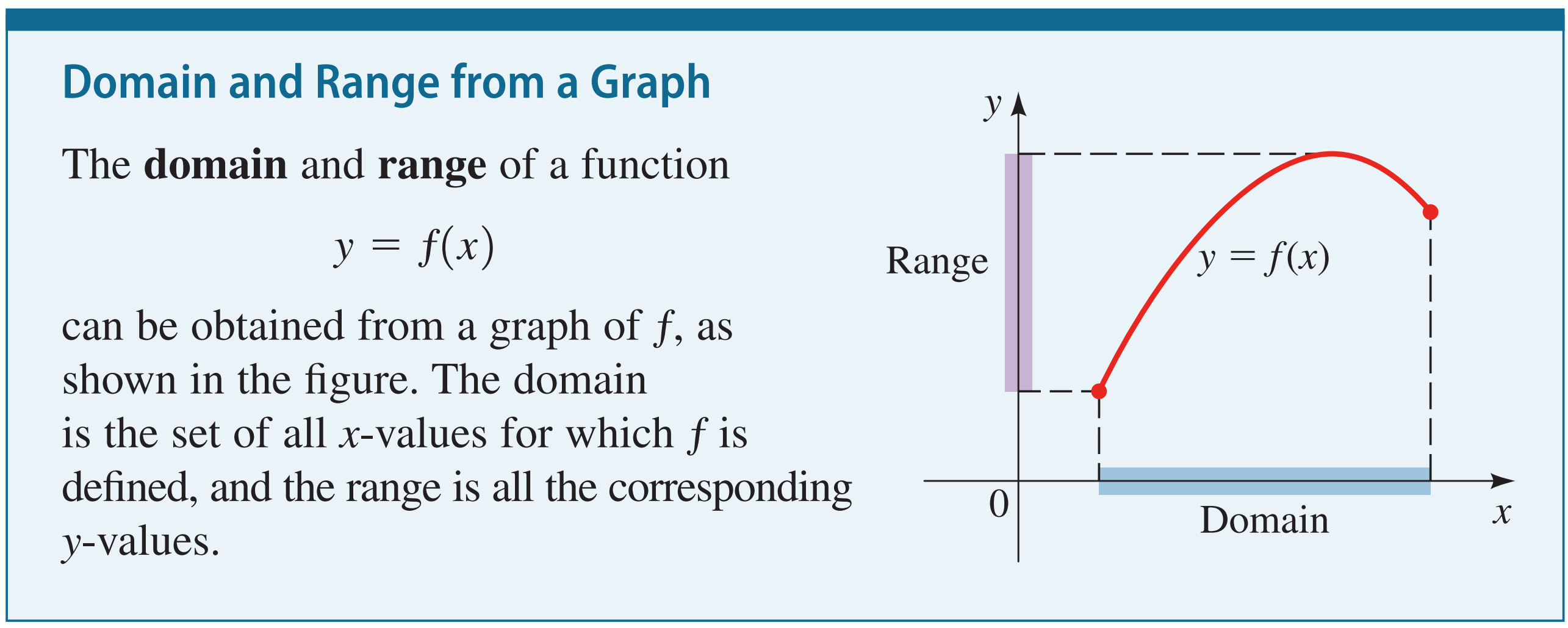
Range notation
Range of (The set of all values such that is an element of the domain .)
Domain of function
- Domain: (or )
4 ways to represent a function
- verbally (by a description in words)
- algebraically (by an explicit formula)
- visually (by a graph)
- numerically (by a table of values)
Graph of functions
If is a function with domain , then the graph of is the set of ordered pairs: plotted in a coordinate plane. In other words, the graph of is the set of all points such that
Average Rate of Change of a Function
In simple terms:
Transformation of Functions
Transformation of functions is a set of mathematical operations that change the position, size, or orientation of a graph without losing its fundamental “family” shape.
(Vertical Stretch, Compression, and Reflection):
- If : The graph is stretched vertically (becomes steeper).
- If : The graph is compressed vertically (becomes flatter).
- If is negative: The graph is reflected across the -axis (flips upside down).
(Vertical Shift):
- If : The graph moves up units.
- If : The graph moves down units.
Vertical/Horizontal Shifting: or
Reflecting: (over x-axis) or (over y-axis)
Stretching/Shrinking: or
Combining Functions
Let’s use and
If I ask for :
- Start with the inside:
- Move to the outside: Put that 6 into
One to One function & Inverse
A function is one-to-one (or injective) if it never takes the same value twice:
If , then
The Horizontal Line Test (HLT)
The easiest way to tell if a function is one-to-one is to look at its graph.
- Pass: If every horizontal line intersects the graph at most once, the function is one-to-one.
- Fail: If any horizontal line touches the graph more than once, it is NOT one-to-one (and has no inverse)
Inverse
If a function is one-to-one, it has an inverse function . The inverse “undoes” what the original function did.
- If , then .
- Domain & Range Swap: The domain of becomes the range of , and the range of becomes the domain of .
To find the inverse formula, follow these four steps:
- Replace with .
- Interchange and (swap them).
- Solve the new equation for .
- Replace with .
Example: Find the inverse of .
notice from + to minus 3 and from multiplication of 2x become x/2
Bird Flight
A bird is released from point A on an island, 5 miles from the nearest point B
on a straight shoreline. The bird flies to a point C on the shoreline and then flies along the
shoreline to its nesting area D (see the figure). Suppose the bird requires 10 kcal/mi of
energy to fly over land and 14 kcal/mi to fly over water.
energy used = energy per mile x miles flown
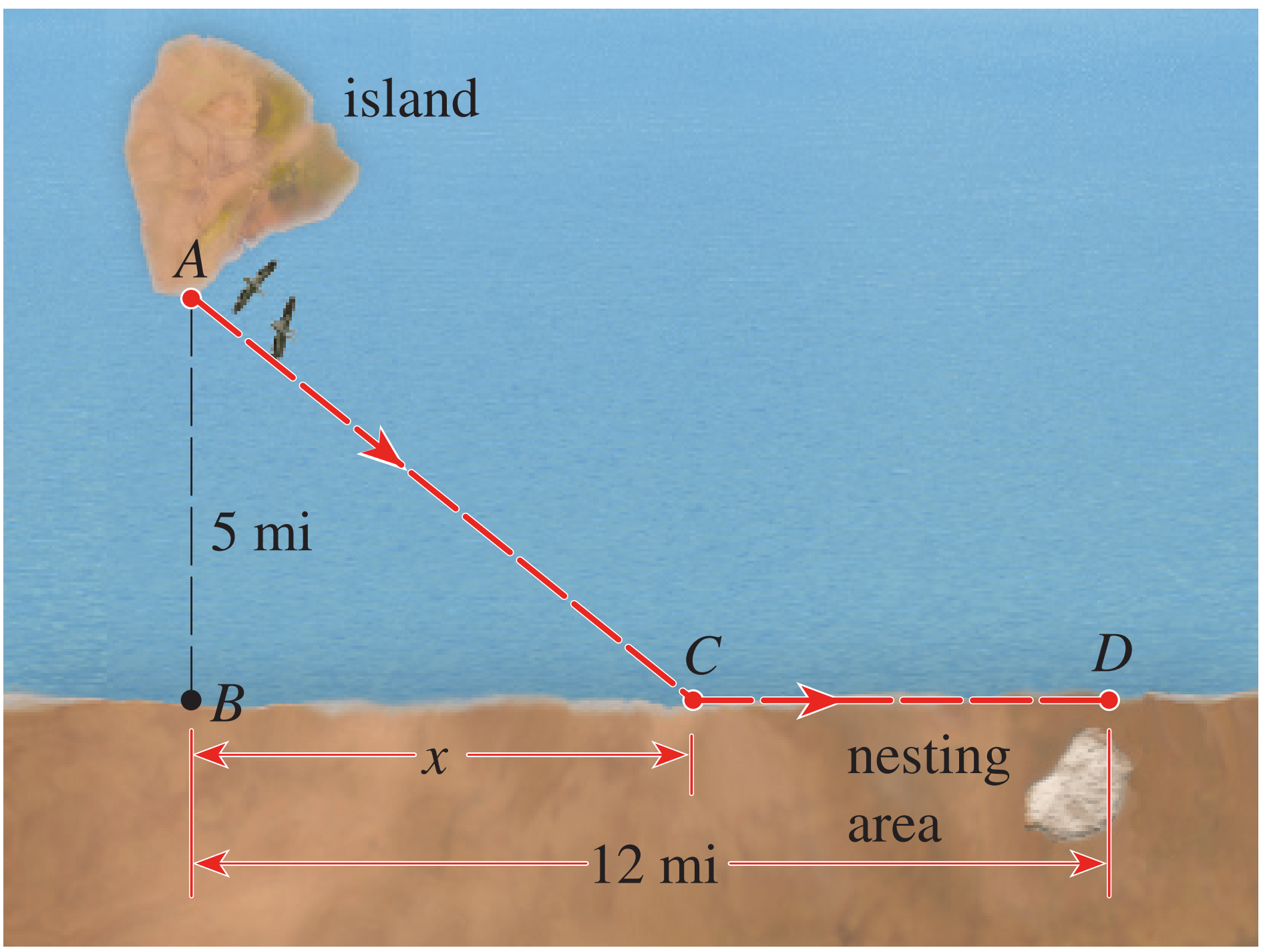
The bird’s journey consists of two segments: flying over water (from A to C) and flying over land (from C to D).
-
Distance over Water ():
The path from to forms the hypotenuse of a right-angled triangle .
-
The height () is 5 miles.
-
The base () is miles.
Using the Pythagorean theorem:
Since energy over water is , the energy used for this segment is:
-
-
Distance over Land ():
The total distance from point to the nesting area is . Since the distance is , the remaining distance over land is:
Since energy over land is , the energy used for this segment is:
Total Energy :
Quadratic Functions
The formula finds the -intercepts (the roots) of the equation :
Vertex form identify its highest or lowest point minima and maxima
Extract the Vertex
Look at the numbers in the spots for and .
- Inside the parentheses, we see . Since the formula has a minus, .
- Outside, we see . So .
- The vertex is at .
The vertex is just a single dot in space. But a parabola can be:
- Skinny (like a needle)
- Wide (like a bowl)
Our is .
- Because it’s positive, it’s a “U” shape.
- Because it’s greater than , it’s a “Skinny” U (it grows twice as fast).
: This is the Vertex (the peak or valley).
- is the horizontal “address” (the ).
- is the vertical “address” (the height, or ).
- : This is the “Shape Master.”
- If is positive, it’s a U.
- If is negative, it’s an n.
The Minus Sign (): This is the “Pusher.” Because it is inside the parentheses with , it works backward from what you expect. If you see , it actually pushed the graph right to .
The square is what creates that “U” shape. Because any number squared (positive or negative) becomes positive, the graph mirrors itself on both sides, creating a valley or a hill.
Polynomial and Rational functions
A polynomial of degree can have up to turning points and can have local and global minima and maxima.
Polynomial
Question: Current: \2060+$1\rightarrow-2$ units sold.
Find (price increases) for Max Revenue ()
Finding the Maximum ():
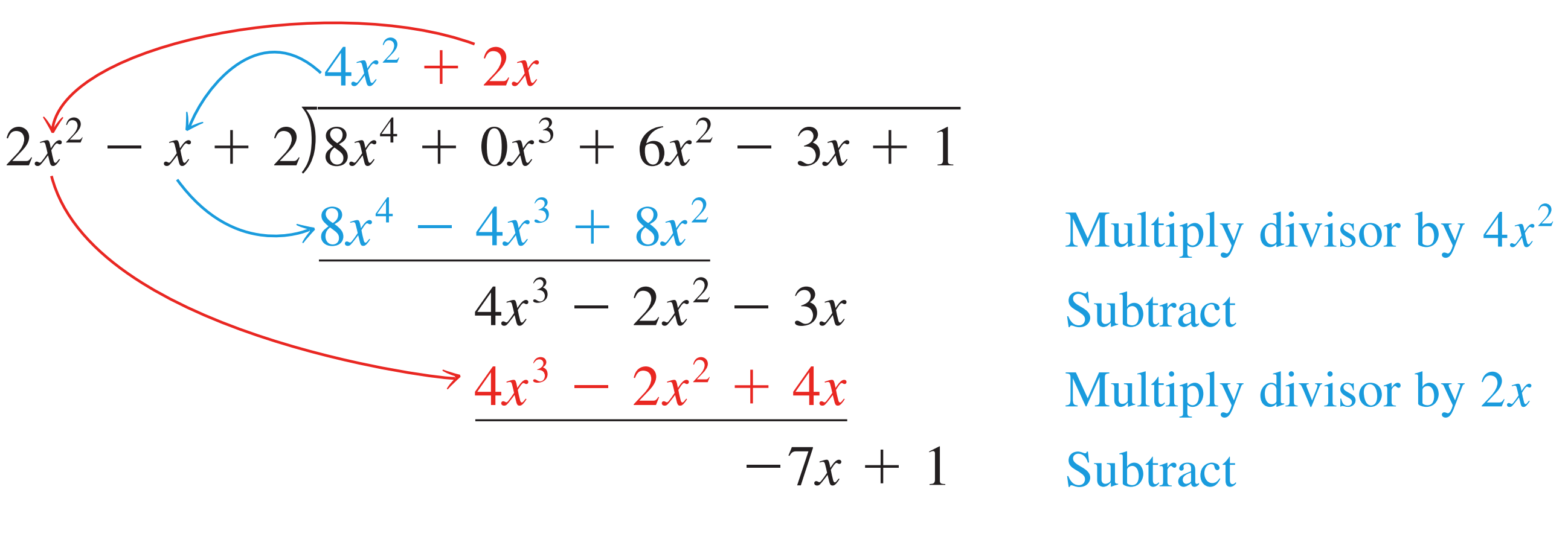
Long Division Polynomial
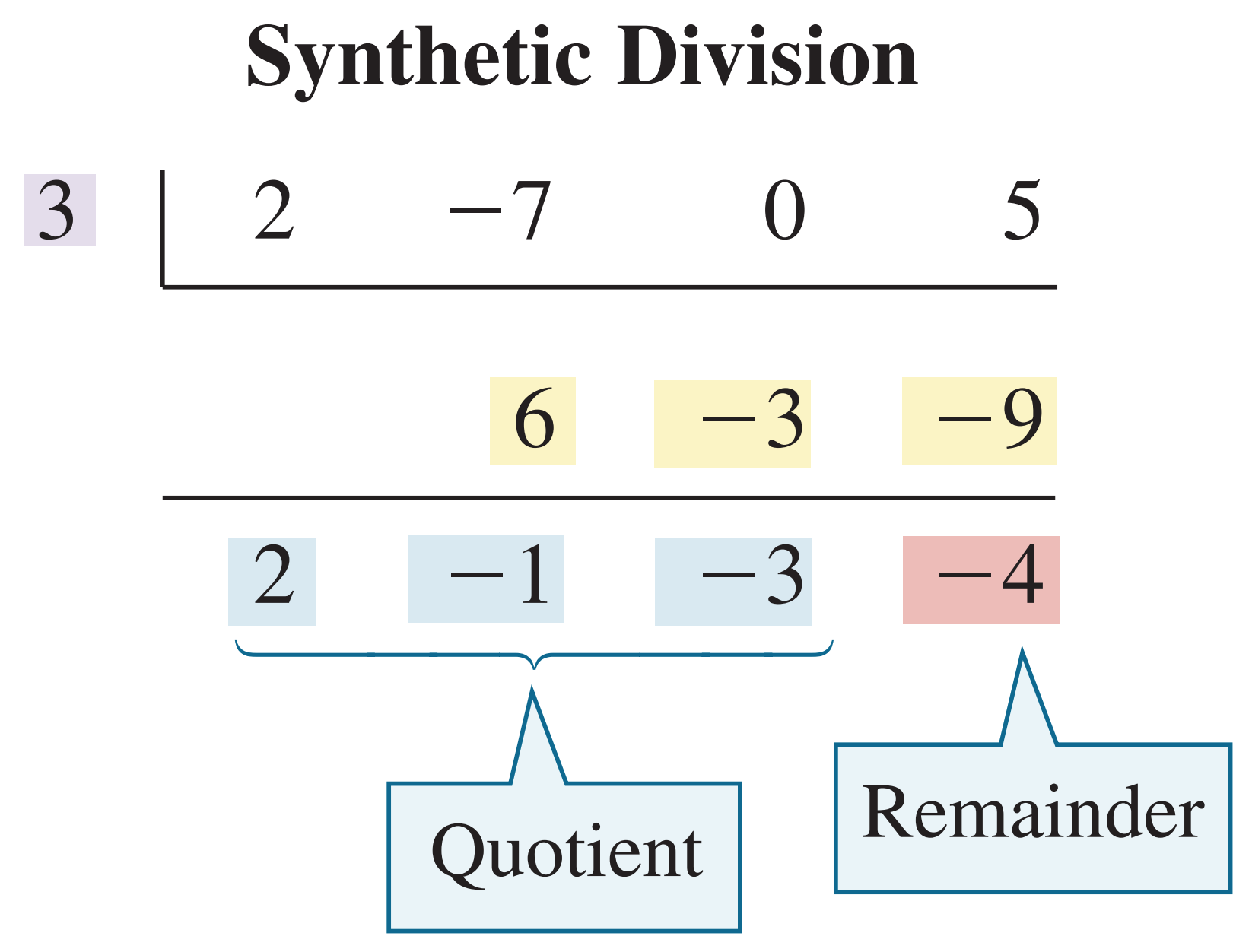
Synthetic Division
Factor Theorem
Factor Theorem is a specialized version of the Polynomial Remainder Theorem. It provides a quick way to determine if a linear binomial is a factor of a polynomial without performing long division.
Question: Is a factor of ?
-
The Test Value: Since we are testing , our value is .
-
The Calculation:
-
The Verdict: Because we got 0, is a factor. It divides the big equation perfectly with no leftovers.
Polynomial Inequality
finding the set of values for that make a polynomial expression greater than, less than, or equal to zero
It typically takes one of the following forms:
Set the polynomial to zero and factor:
Critical values are: .
These roots create four intervals on the number line: , , , and . (We use brackets because the inequality is ).
- Test : (Matches )
- Test :
- Test : (Matches )
- Test :
The intervals where the expression is less than or equal to zero are:
Rational Function
where and are polynomials, and .
A company produces custom sneakers. They have a fixed monthly cost (rent, machines) of 30 per pair.
If they produce pairs of sneakers, the total cost is:
The Average Cost per pair () is a rational function:
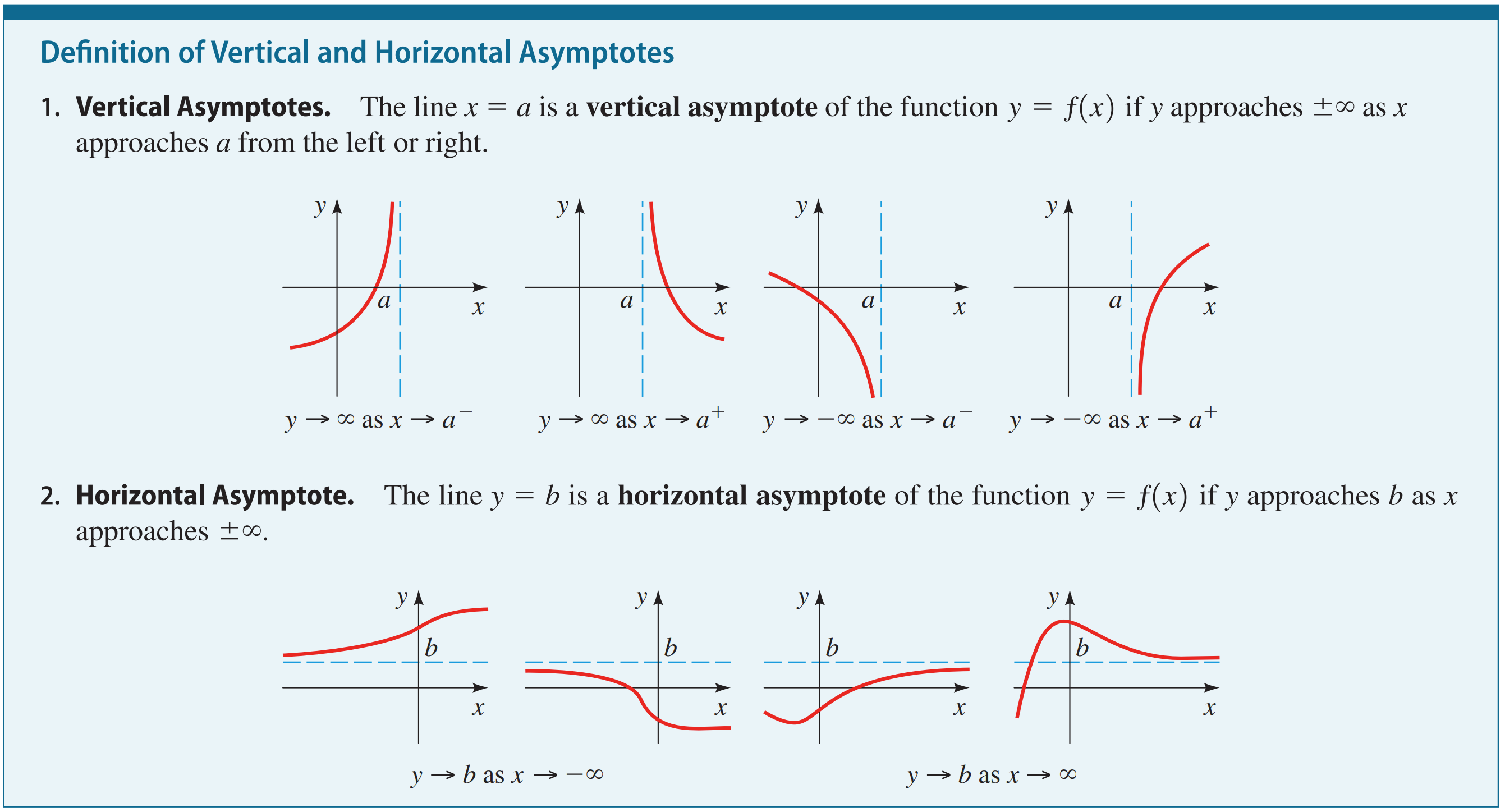
- Vertical Asymptote (): You can’t calculate the average cost for 0 sneakers (division by zero). As production gets closer to zero, the average cost per unit skyrockets.
- Horizontal Asymptote (): As production increases to very large numbers, the 30.
Factor Theorem for Rational Functions
In a rational function, we are usually looking for zeros (where the graph hits the x-axis).
- The Rule: is a factor of the rational function if and only if it is a factor of the numerator , and does not make the denominator zero
- If , then must be .
- Test : Plug in .
- .
- Verdict: is a factor of the function
When you divide polynomials in a rational function, sometimes a factor appears in both the top and bottom. This is a special case of division called Point Discontinuity.
If you have:
- Divide/Cancel: You can divide by , which equals .
- The Result: The function simplifies to .
- The Catch: Even though the divided out, the original function is still “undefined” at . This creates a Hole in the graph at that exact spot.
Long Division and Asymptotes
If you use Polynomial Long Division on a rational function where the top power is higher than the bottom, the Quotient tells you the end behavior (the Slant Asymptote).
Using Long Division:
- The Equation:
- quotient is the answer to a division problem =
- Since the remainder is 3 (not zero), we know is not a factor of the numerator.
- The Graphing Connection: As gets huge, the fraction disappears, and the graph starts to look exactly like the line .
Rational Inequality
Solve:
-
Numerator:
-
Denominator:
These two numbers create three intervals: .
| Interval | Test Point (x) | Calculation | Result | Sign |
|---|---|---|---|---|
| Positive (+) | ||||
| Negative () | ||||
| Positive (+) |
We want the intervals where the result is (Positive).
- We include because it makes the numerator zero (and the inequality allows ).
- We exclude because it makes the denominator zero (undefined).
Solution:
Exponential & Logarithmic Functions
Exponential
- : The initial value (the y-intercept).
- : The base (growth or decay factor).
- If , it is Exponential Growth.
- If , it is Exponential Decay.
The Growth/Decay Rate Form
- : The percentage rate of change (written as a decimal).
- : Used for growth (e.g., for 5% growth).
- : Used for decay (e.g., for 5% loss).
natural exponential function is a specific type of exponential function where the base is the mathematical constant (often called Euler’s Number) is an irrational constant, similar to . Its value is approximately
It was discovered by studying compound interest. If you had 2.718… () at the end of the year
Logarithmic
The most fundamental formula for a logarithm relates the logarithmic form to its exponential form:
- (Base): Must be positive () and not equal to .
- (Argument): Must be a positive real number ().
- (Exponent): The result or the “power” itself.
| Rule Name | Formula |
|---|---|
| Product Rule | |
| Quotient Rule | |
| Power Rule | |
| Zero Property | |
| Identity Property | |
| Inverse Property | and |
Natural logarithm
written as , uses the mathematical constant as its base.
While a common logarithm (base 10) tells you how many times you multiply 10 to get a number, the natural logarithm tells you how long it takes to reach a certain level of growth if that growth is continuous.
Where (Euler’s number) is approximately
Because it is the inverse of the exponential function , the relationship is: